
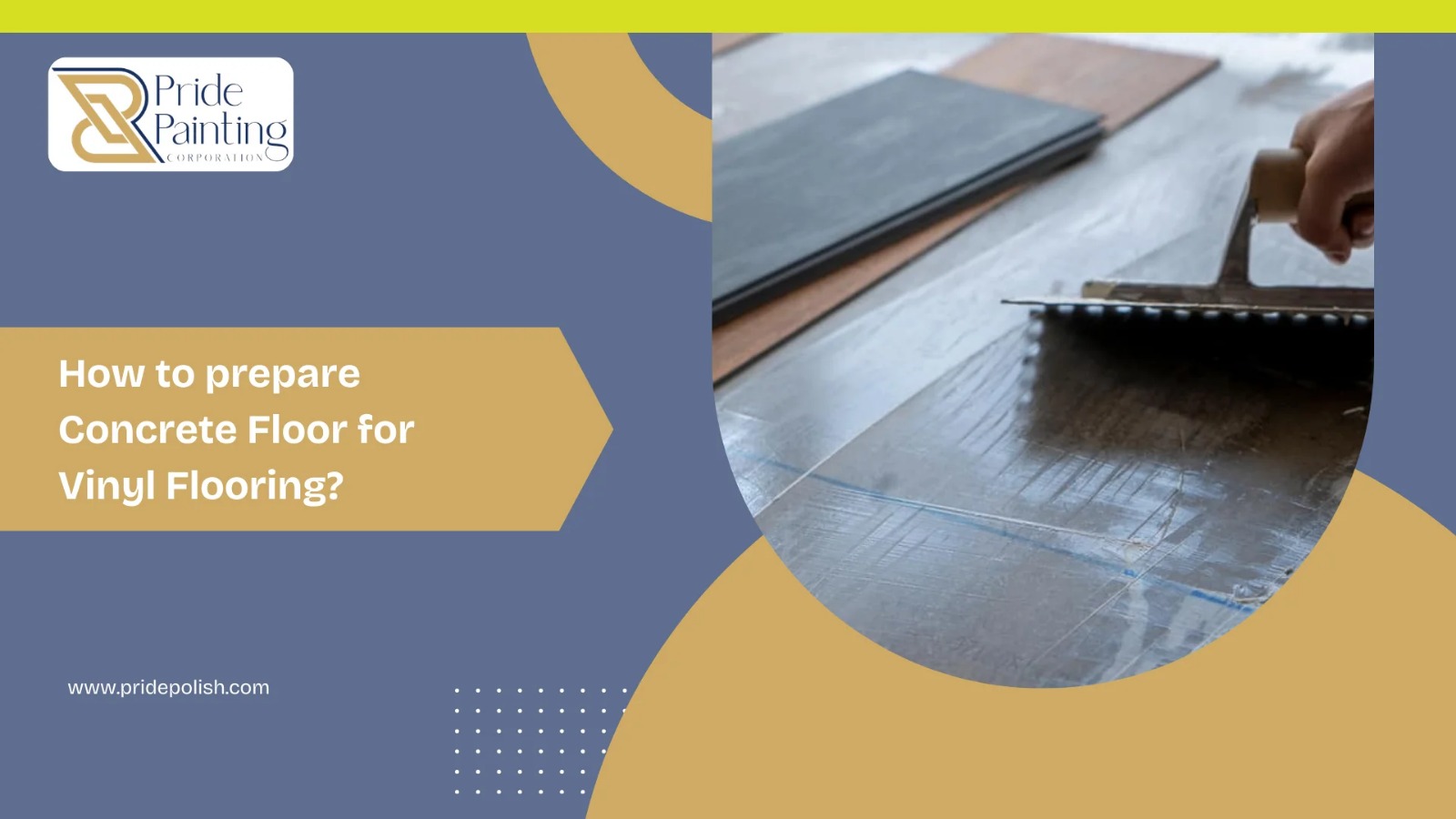
Installing vinyl flooring on concrete is a great choice for commercial and residential areas, all credit goes to its durability, affordability, and catchy looks. Though vinyl is made to last long, its performance depends a lot on how well the surface is prepped.
In order to achieve a smooth vinyl floor, it is important to know how to prepare concrete floors for vinyl flooring. If the surface is not prepped well, the results will be uneven surface, bubbles, and flooring damage, no matter which quality vinyl you use.
The key to achieving a smooth, long lasting vinyl flooring is proper concrete preparation. At Pride Flooring Corporation we specialize in a wide range of durable, decorative epoxy floor coatings for residential, industrial and commercial properties.
Preparing concrete floors for vinyl flooring is important to ensure a smooth, dry, and structured surface. It helps prevent premature damage, mold, and gaps. Let's discuss few key reasons for preparing concrete floor for vinyl flooring;
Concrete has a porous surface, it releases moisture causing molds and damage in vinyl. Sealing concrete is necessary to protect the flooring.
Before installing vinyl flooring on concrete, a smooth surface is a must. If the concrete surface is not even, it will lead to cracks, shifts, and breakage.
Cleaning the concrete properly and removing dust, oil, and paints will allow proper adhesion and ensure that the vinyl binds well to the surface.
Proper preparation and using underlayment for vinyl flooring on concrete improves structural integrity as well as makes the floor warmer and comfortable.
Before installation these are a few steps that you should keep in mind to prepare concrete properly and ensure a durable, high performance flooring.
Floor inspection is crucial. Check the condition of the concrete floor and look for any cracks, damage, moisture issues, gaps, uneven surface, dust, mold, grease and anything that can cause problems later during installation.
To achieve proper adhesion, cleaning the surface thoroughly is very important. Here cleaning involves sweeping, or vacuuming the floor and wiping any oil or chemical stains. You can also use mild detergents. Before going on to the next step, make sure that the concrete is fully dried.
Small cracks or holes can be tiny imperfections for you, but these small damages can be visible through vinyl flooring if not prepared well. Create a smooth, stable surface by filling cracks and holes with concrete patching compound.
Moisture can be a big trouble when installing vinyl flooring over concrete. Proper moisture control can help avoid floor from wrapping or cause poor adhesion. To ensure that the concrete is fully dry, install a moisture barrier and perform a moisture test before installation.
An underlayment for vinyl flooring on concrete can form an extra vapor barrier, providing comfort and insulation. This will help reduce noise and make the floor comfortable to walk on.
Before installing new vinyl flooring, make sure to read the manufacturers instructions related to your product or contact us at Pride Polish for any further queries.
Q1. Can I put vinyl flooring over the concrete surface?
Yes, you can. It's a great idea. However, there are still few steps to follow to make your surface durable and last long.
Q2. What to put on the concrete surface to install vinyl flooring?
Concrete surfaces are prone to moisture, this can create molds and damage vinyl. To protect your flooring and increase its life span install rubber or specialized foam for moisture resistance.
Q3. How do I fix cracks and holes on concrete floors?
To repair cracks and uneven surface use concrete patching compound or fillers and smooth out the surface for an even finish.